If your team still monitors with floor wedges, you know the problem: the stage turns into a volume war where every musician cranks their wedge to hear themselves over the person next to them, until the noise on deck competes with the PA itself. In-ear monitors solve that at the root: they isolate, deliver a clean personal mix, and become almost mandatory the moment you start running click and multitracks, because the click can never bleed into the room.
But not every in-ear is built for the stage, and the difference between models isn't cosmetic — it's about drivers, isolation, and how they connect to your system. This guide breaks down what to look for and organizes your options by tier, so you choose by role and team size, not by hype.
Why in-ears instead of floor monitors
The core advantage is isolation. A good in-ear seals the ear canal and passively attenuates outside noise by 25 to 37 dB. That lets you hear your mix at a far lower volume, because you're no longer fighting stage noise. The payoff: less fatigue, more clarity to stay in tune, and real long-term hearing protection.
On top of that comes the personal mix: each musician builds exactly what they need — the vocalist more voice and click, the drummer more bass and kick — without affecting anyone else or the room. And as we said, once click and pre-recorded guides come in, in-ears stop being a luxury: they're the only way to keep those signals out of the PA.
How they work: dynamic, balanced armature, and hybrid drivers
The driver is the engine of the in-ear, and there are two base technologies. Understanding them is what lets you choose well by role.
Dynamic driver
It's the same principle as a miniature loudspeaker: a diaphragm moved by a coil. It handles low frequencies very well, with a warm, natural sound, which makes it the favorite for drummers and bassists who need to feel the body of the low end. They're larger and cheaper, so they dominate the entry tier. The Shure SE215 and Sennheiser IE 40 PRO are examples of a single, well-tuned dynamic driver.
Balanced armature (BA) driver
This is a smaller, more efficient component, with a tiny metal armature that vibrates as current passes through it. It delivers superior midrange and treble clarity — ideal for a vocalist who needs to hear every nuance of their voice — and because it needs no vent port, it usually isolates better. Its weakness is bass: a single BA can't deliver the body of a dynamic. The Shure SE425 uses two balanced armatures precisely to gain detail.
Hybrids and multi-driver
High-tier models combine both technologies: a dynamic for the lows and several balanced armatures for mids and highs, split by an internal crossover that routes each frequency range to the right driver. More drivers isn't automatically "better" — it's more control over the response. A single, well-tuned dynamic can sound more coherent than a poorly designed multi-driver.
Isolation and hearing safety: the spec almost no one checks
Isolation isn't just comfort — it's prevention. NIOSH (the U.S. occupational health institute) sets the safe limit at 85 dB over 8 hours. And here's what many people don't know: for every 3 dB the level rises, the safe exposure time is cut in half. At 100 dB — a normal level on many stages — permanent damage can begin in about 15 minutes.
The silent enemy is called volume creep: when the in-ear doesn't seal well, stage noise leaks in, so you raise the volume to cover it, and without noticing you finish the set monitoring at dangerous levels. An in-ear that isolates 30 dB or more lets you hear everything at a low, safe volume. That's why isolation is, literally, the single most important spec for a musician who plays every week.
Universal vs. custom: fit changes everything
There are two ways an in-ear seats in your ear, and the difference is huge on stage.
The universal kind ships with tips (foam or silicone) in several sizes. They're flexible, anyone can use them, and they're the logical entry point. Memory foam isolates more than silicone, but the seal depends on the tip and can loosen if you move a lot during the set.
Looking for multitracks for your team? Explore them on Recursoiglesia.
Browse multitracks →The custom kind is built from a mold of your ear. They isolate better, they don't shift even during intense worship, and because they seal perfectly they let you monitor lower — meaning they protect your hearing more. The trade-off is cost and time: you need an audiologist impression and weeks of waiting. For a team that plays every week, they're the investment that pays off most over the long run.
One important point for vocalists and leaders: because they seal so well, in-ears isolate you from the room and the congregation. If you need to feel the atmosphere, there are two fixes — order your customs with an ambient port that lets some outside sound in, or (better and more controllable) place an ambient mic in the mix, which captures the room and feeds it into your in-ears at a level the engineer controls.
How they connect: wired vs. wireless
The in-ear is only half the system. The other half is how the signal reaches it, and there are two paths.
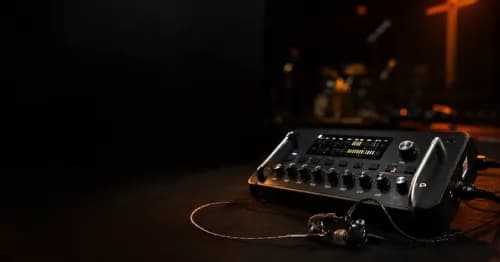
The wired path is the most reliable and affordable. It usually leans on personal mixers like the Aviom series, where each musician builds their own mix from a unit at their position, or systems like the Xvive PX, which takes several signals and runs over a network cable up to 60 meters with power included. Zero RF interference, zero batteries. The only real downside is the cable tethering you to one spot.
The wireless path gives you freedom of movement with a bodypack receiver. This is where radio frequency (RF) comes in, and you have to pick the band carefully:
- Professional UHF systems like the Shure PSM 300 or Sennheiser EW IEM G4. The G4 offers up to 1,680 tunable frequencies, ideal for cities with crowded spectrum or teams scaling to 6 or more channels. The PSM 300 stands out for clean audio and one-touch sync, very volunteer-friendly.
- Digital 2.4 GHz systems like the Xvive U4: easy to operate and license-free, but they share the band with WiFi and can clash with digital consoles like the X32, forcing a channel change.
- The 5.8 GHz evolution, like the Xvive U45, dodges WiFi congestion and delivers 24-bit / 48 kHz audio with a 107 dB signal-to-noise ratio.
One technical detail when picking an in-ear for wireless: check the impedance and sensitivity. Low-impedance, high-sensitivity in-ears drive easily from a bodypack and play loud enough without straining the output.
Entry tier: where to start
If your team is making the jump to in-ears for the first time, this tier gives you 80% of the benefit. The Shure SE215 is the de facto standard in worship circles: a single dynamic driver, full sound with solid bass, and up to 37 dB of isolation — a figure that's hard to beat at its level. The Sennheiser IE 40 PRO is its direct rival, also a single dynamic, with a secure fit built for moving on stage.
A word of caution on ultra-budget in-ears from brands like KZ, Moondrop, or Truthear: many sound surprisingly good for listening to music, but they tend to isolate less, and on a loud stage that's exactly the spec that matters most. They're fine for testing the workflow, but not the safest choice for your ears on deck.
Mid tier: more detail and separation
Once you've got the workflow down and want more resolution, the mid tier introduces multi-driver designs. The Shure SE425, with its two balanced armatures, separates instruments better and leaves the voice far more defined — a noticeable jump for vocalists. The Sennheiser IE 400 PRO and IE 500 PRO go for a high-end dynamic that pairs detail with more natural bass. Brands like Westone also live in this territory, with multi-driver universal models.
Professional and custom tier: the top
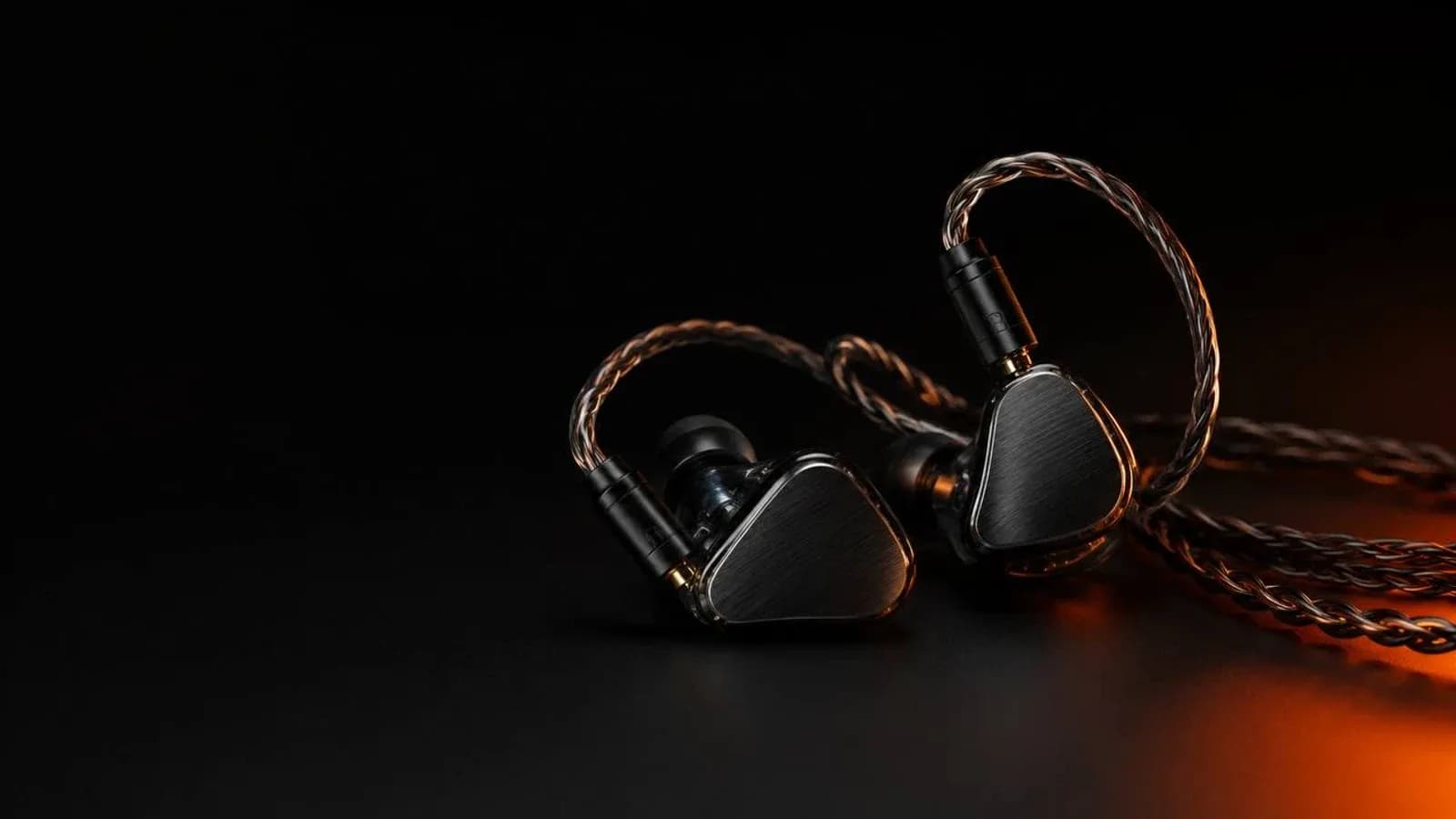
At the high end are brands like 64 Audio, Ultimate Ears Pro, JH Audio, and the custom line from Westone. Here you find multi-armature configurations with crossovers, hybrid systems, and pressure-relief technologies that reduce the fatigue of a sealed ear over long sets. These are the choice of worship leaders and lead vocalists who play week after week and for whom their hearing is their working tool.
How to choose by role
- Drummer and bassist: prioritize bass. A dynamic driver (or a hybrid with a dynamic for the low end) gives you the body you need to feel the tempo and the pulse.
- Vocalist: prioritize midrange and treble clarity. A balanced armature (or several) lets you hear your pitch precisely. Good isolation matters double here: you sing better when you hear yourself clean.
- Guitarist and keyboardist: a balance. Most do plenty well with a solid entry- or mid-tier single dynamic.
- Worship leader: maximum isolation and, almost always, an ambient mic in the mix so you don't lose contact with the room while you lead.
Common mistakes and care
- Buying by driver count, not isolation. A single dynamic that seals well protects your ears more than a multi-driver that doesn't fit.
- Using the wrong tip. Try every size until you get a full seal. Without a seal, you lose bass and isolation at once.
- Forgetting to clean them. Wax clogs the driver bore and kills the sound. Clean the tips and check the filters regularly.
- Neglecting the cable. Most in-ear failures come from the cable, not the driver. Models with a detachable cable (MMCX or two-pin) let you replace it without tossing the whole set.
- Monitoring too loud. If you finish the set with ringing ears, your mix was too hot. Drop the overall level and let the isolation do its job.
Explore more resources to elevate your worship at recursoiglesia.com, where you'll find multitracks, charts, templates and more. And follow us so you never miss a release: on Instagram and Facebook as @recursoiglesia.